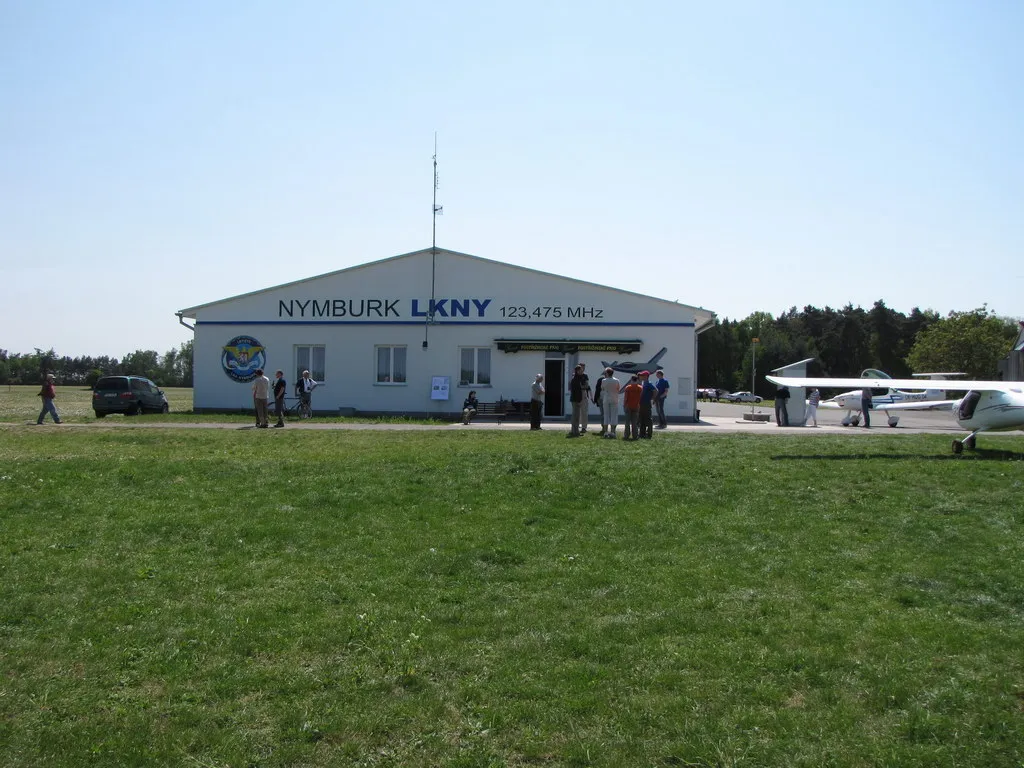
History of the airfield
Enthusiasm for sport and recreational flying in the Nymburk area began to take shape after the Second World War.
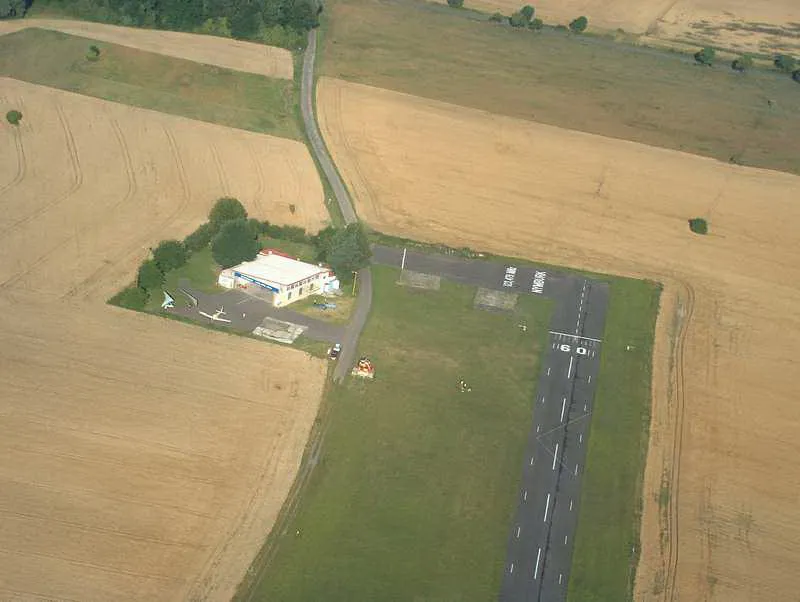
The first flights used mostly captured gliders on a field north of the town. Later, flying moved to Oškobrh hill and the military airfield at Milovice-Mladá, from where sport pilots had to relocate to a field near the village of Dvory. There too the proximity of a military airfield caught up with them, so the choice fell on the flat area south of Nymburk and north of Hořátev, where the airfield remains to this day. Construction of a hangar at the new site began in 1950.
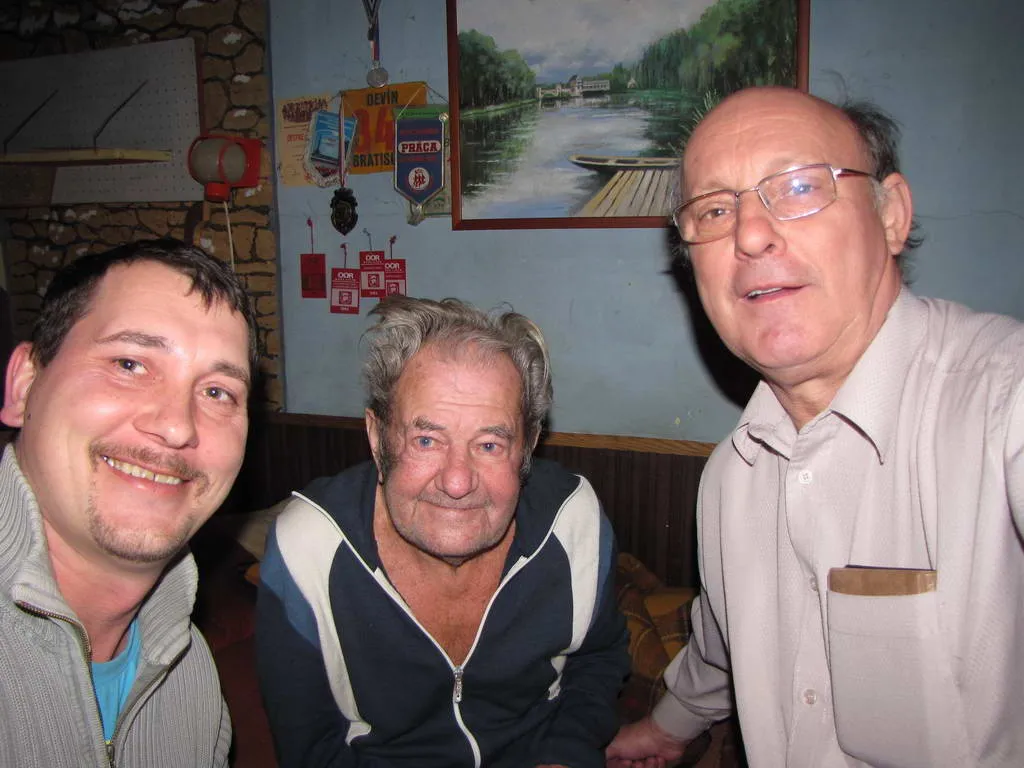
The early days of flying from today’s airfield are linked above all to Olda Syrový, who after gaining his qualifications became head of the local aero club and, as an instructor, passed on his knowledge to a large group of pilots.
The crop-dusting era
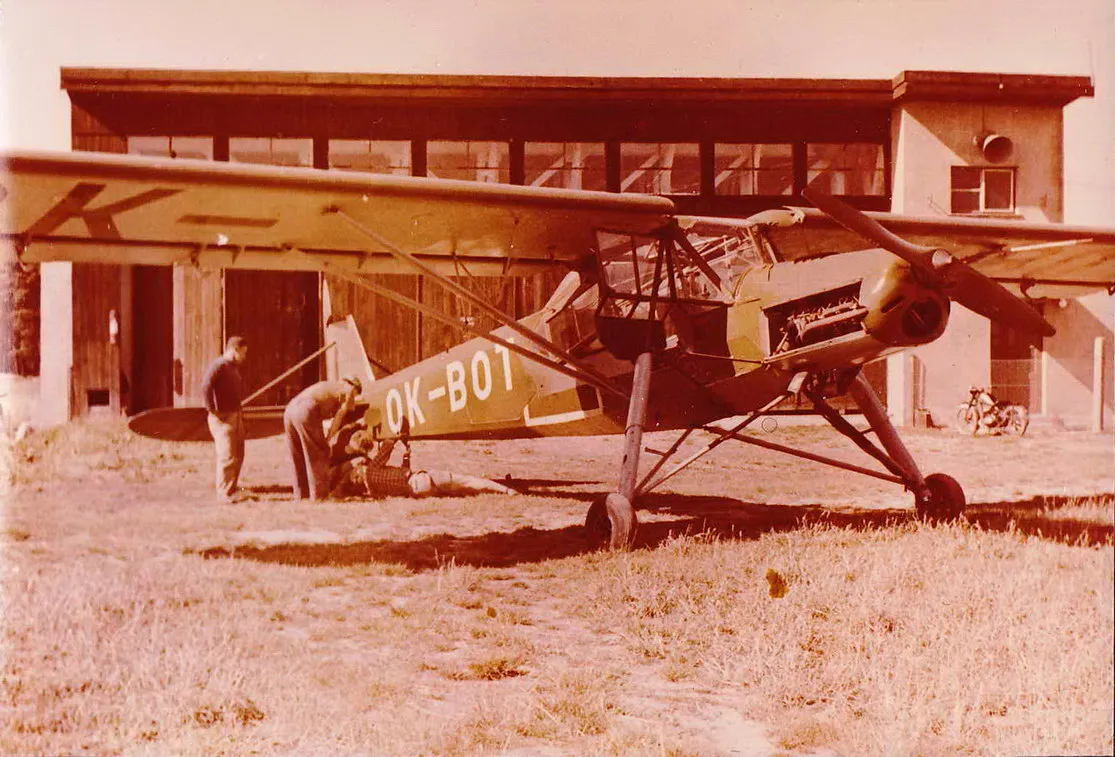
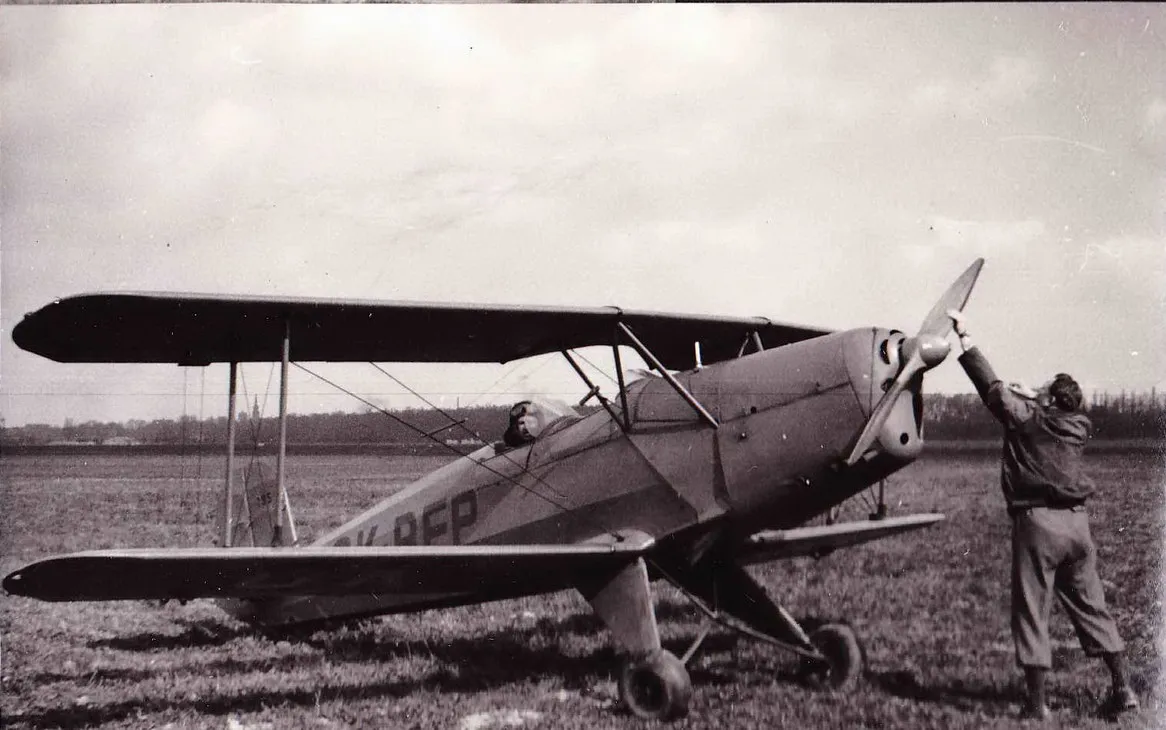
In the 1950s the field hosted glider, powered and parachute training. This era ended in 1958 when the state directively closed operations. From 1959 the hangar served as a warehouse – even as a horse stable. Only in 1977, when the hangar was acquired by an agrochemical company from Městec Králové, did flying resume – albeit only with crop-dusting aircraft. So that Z-37 Čmelák, AN-2 and L-60 Brigadýr aircraft could use the field year-round, a 600 m asphalt runway was built.
Free flying after 1989
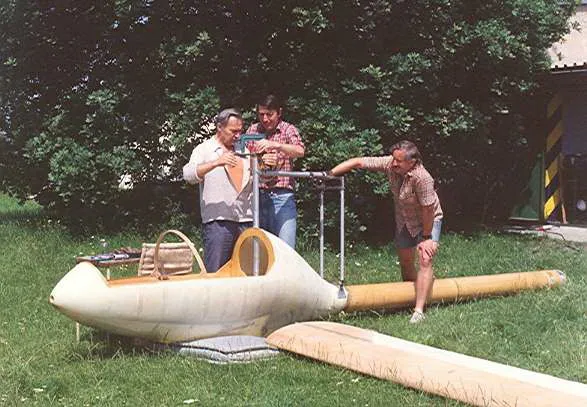
Just a year after November 1989, a group of enthusiasts established the MINIWING Club Nymburk and, by agreement with the field’s user, gained access to the site. They began with the amateur build of a D-7 Straton; a two-seat Straton later made it possible to train new pilots. The club subsequently acquired the hangar. As flying grew, the idea of a fly-in of ultralight aircraft was born in 1991 – held every year since.
Modern era
A new chapter began in 1994 when the hangar and asphalt runway were bought by aviation enthusiast Olda Hořák. After initial difficulties and misunderstandings, he in time became the airfield operator and boldly set about building a new hangar of unusual capacity, together with an aircraft fuelling point. It was successfully approved in 2006 – and from that moment the modern history of Nymburk airfield has been written.